Garden design specialism
Sustainable composite decking, quietly engineered.
Decking that performs like timber but doesn't rot, twist, or splinter. Specified for private gardens across London, Kent, and the Home Counties, installed by the studio's own carpenters.
A softer hand than hardwood, the same working life.
Composite decking is a co-extruded board of recycled hardwood fibre and virgin-grade polymer. Finished well, it reads as timber. The deep graphites and warm umbers of a British hardwood, the tooled edge, the long plank. Walked on, it feels the same.
Where it earns its keep is in what it doesn't do. It doesn't rot at the joist line after seven years. It doesn't silver unevenly under London soot. It doesn't need re-oiling every spring. For a garden built to last a generation, it is the quietest decision on the plan.
The material in plain terms.
01
Material
Co-extruded hardwood-polymer.
Recycled timber fibre with a polymer cap. Fade- and stain-guarded. Made in Europe.
02
Finishes
Seven tones, grooved or smooth.
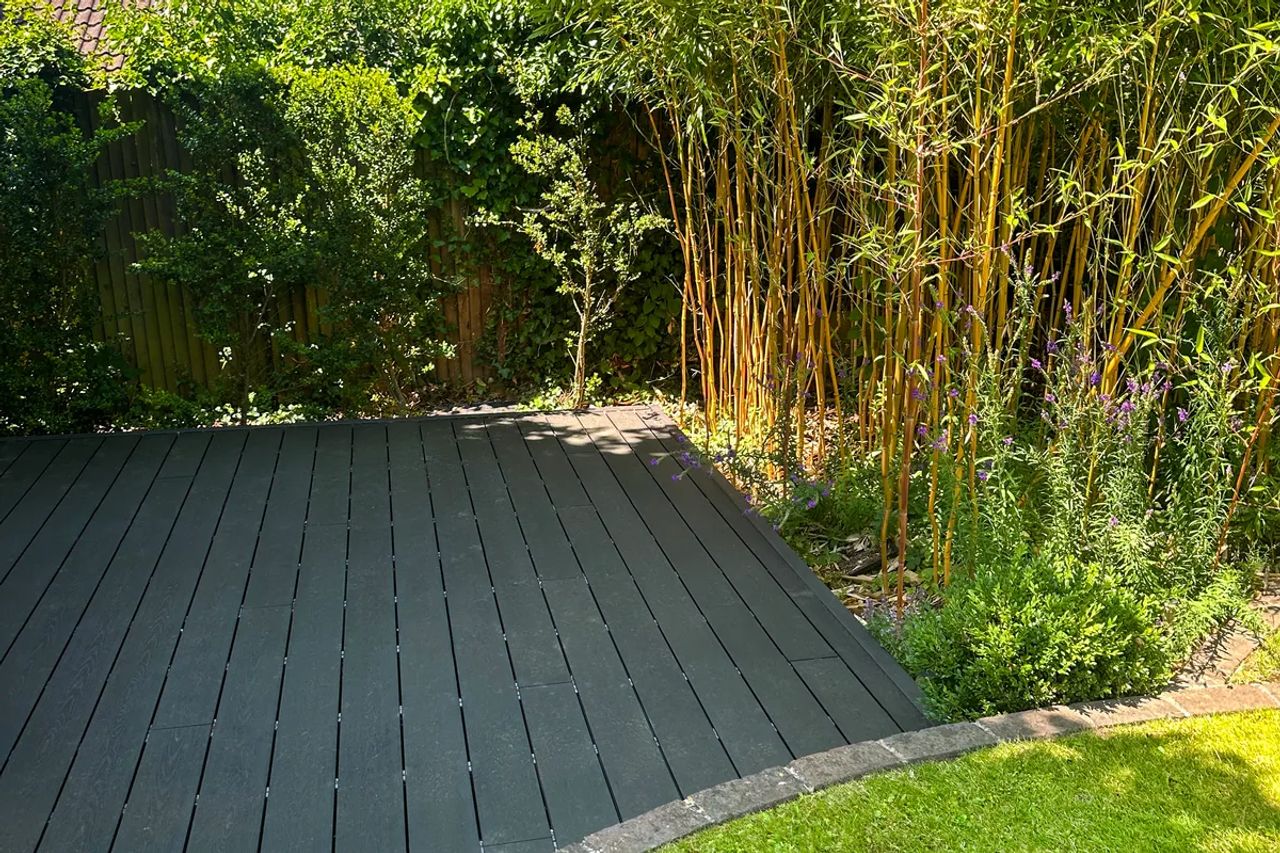
Deep graphite, warm umber, weathered oak, and four more. All with a slipped-brush or flat surface.
03
Lifespan
Twenty-five years, warrantied.
Manufacturer-warrantied against rot, splintering, and insect attack. In practice, longer.
04
Sustainability
95% recycled content.
End-of-life recyclable back into new boards. Our offcuts return to the yard, not the skip.
How it compares to timber.
Down to the last board.
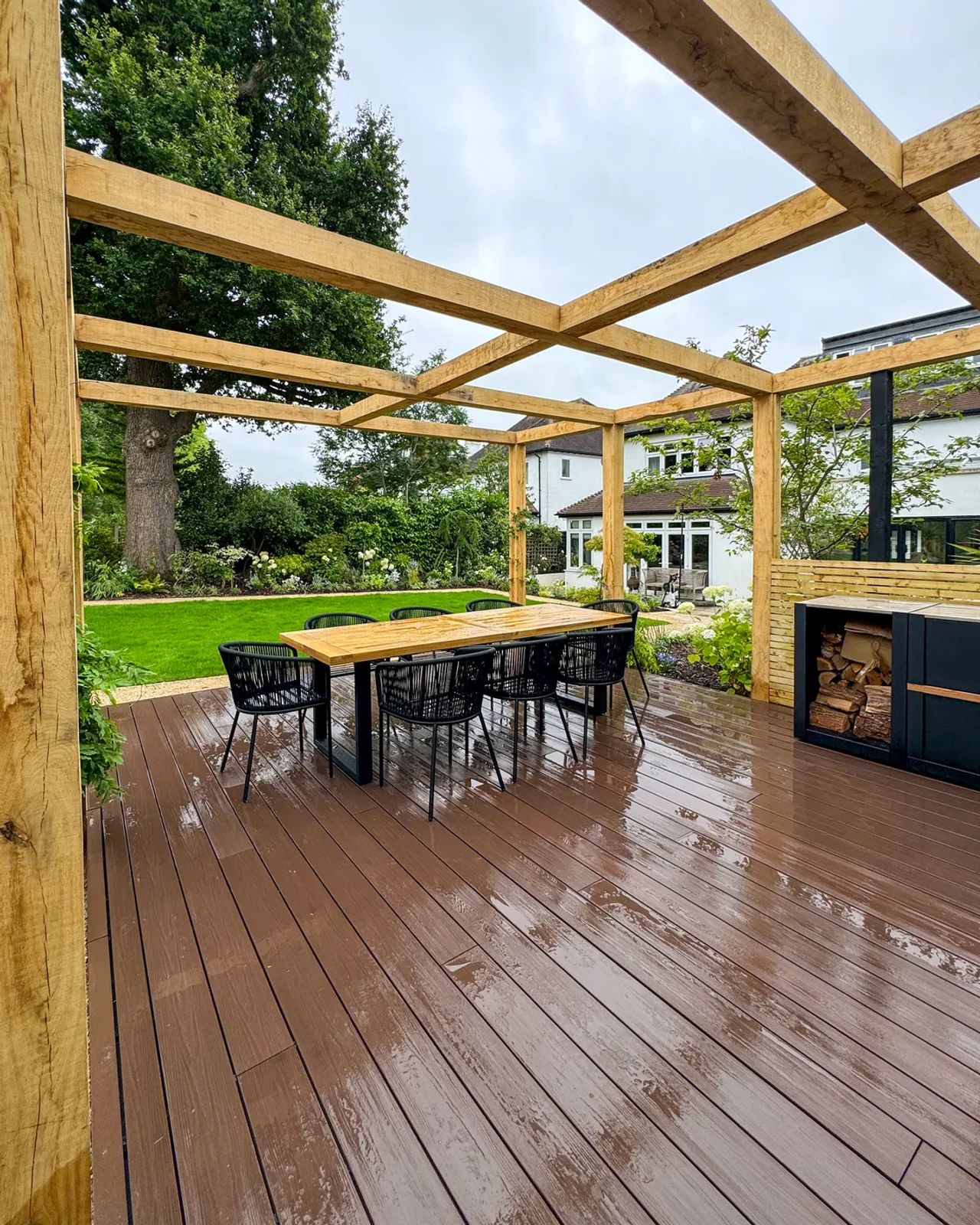
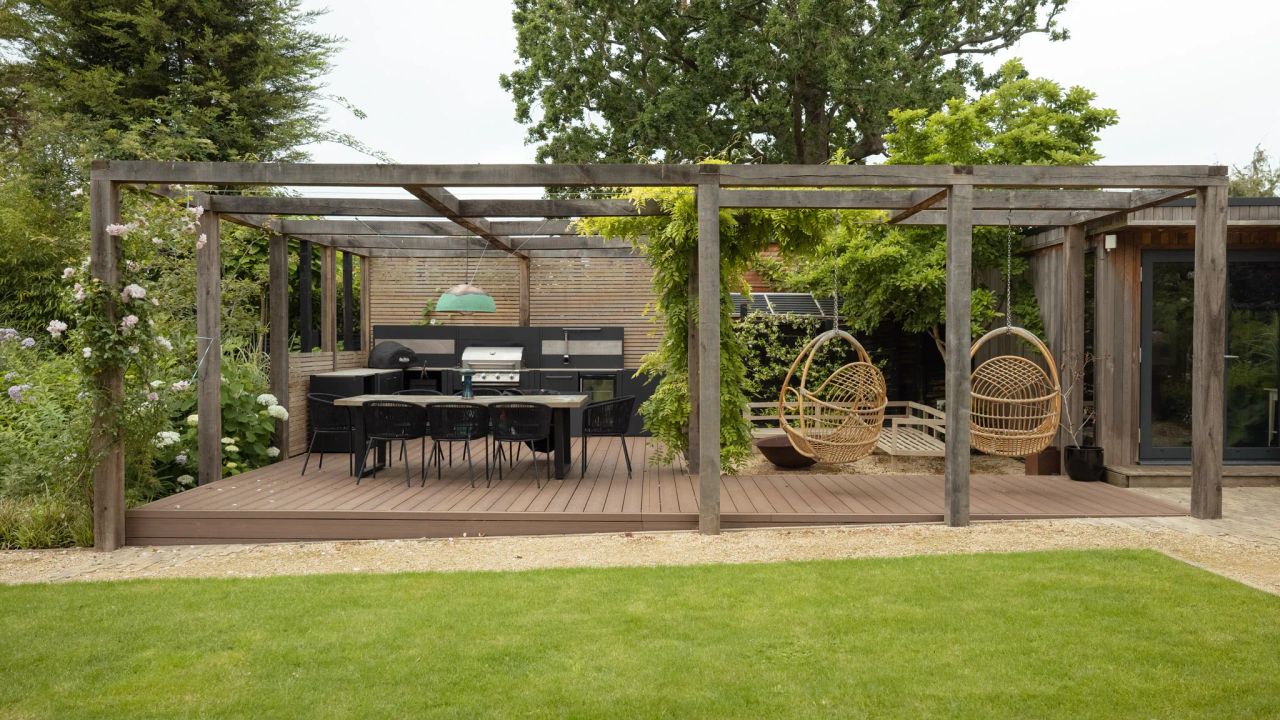
Warm umber, under the pergola
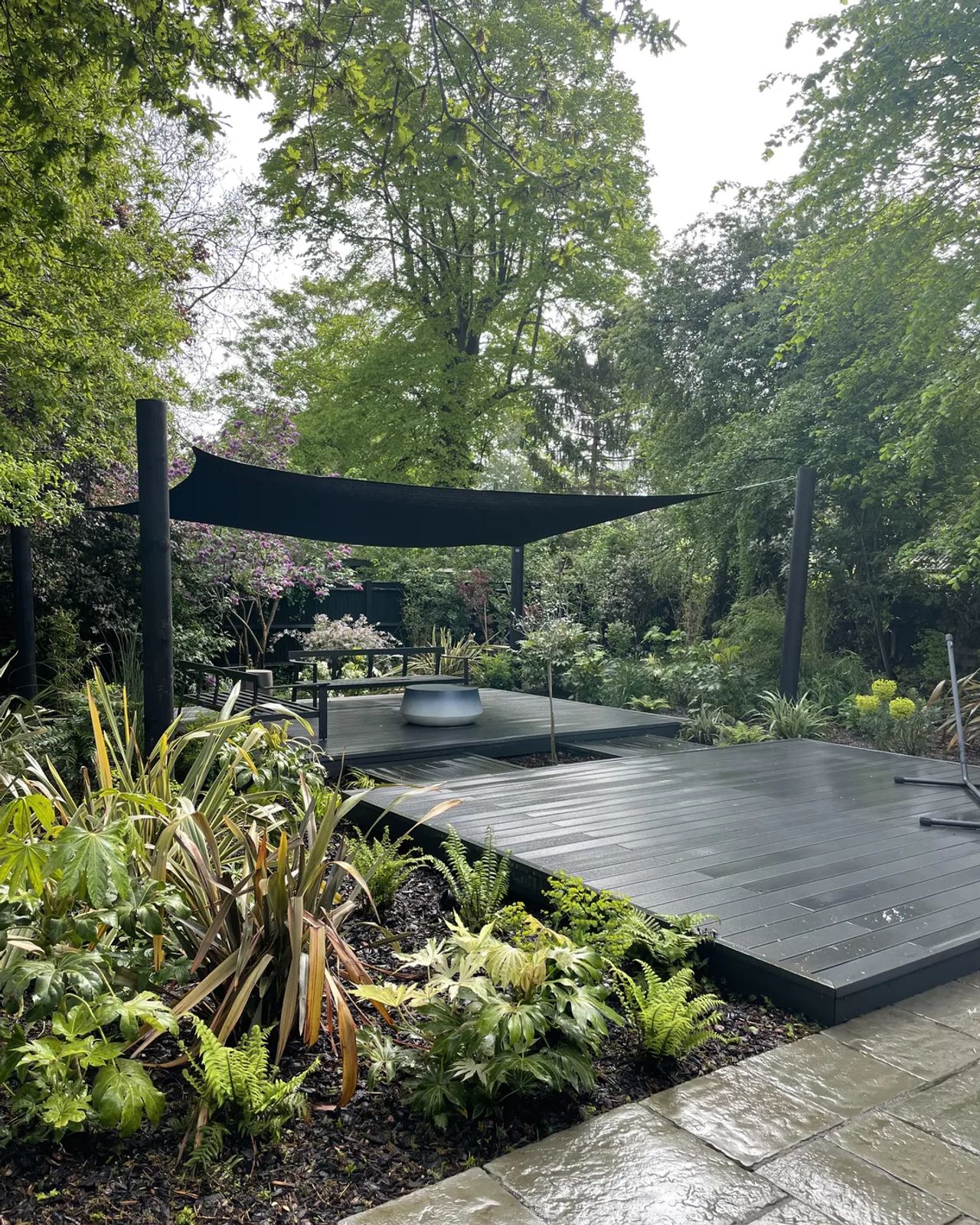
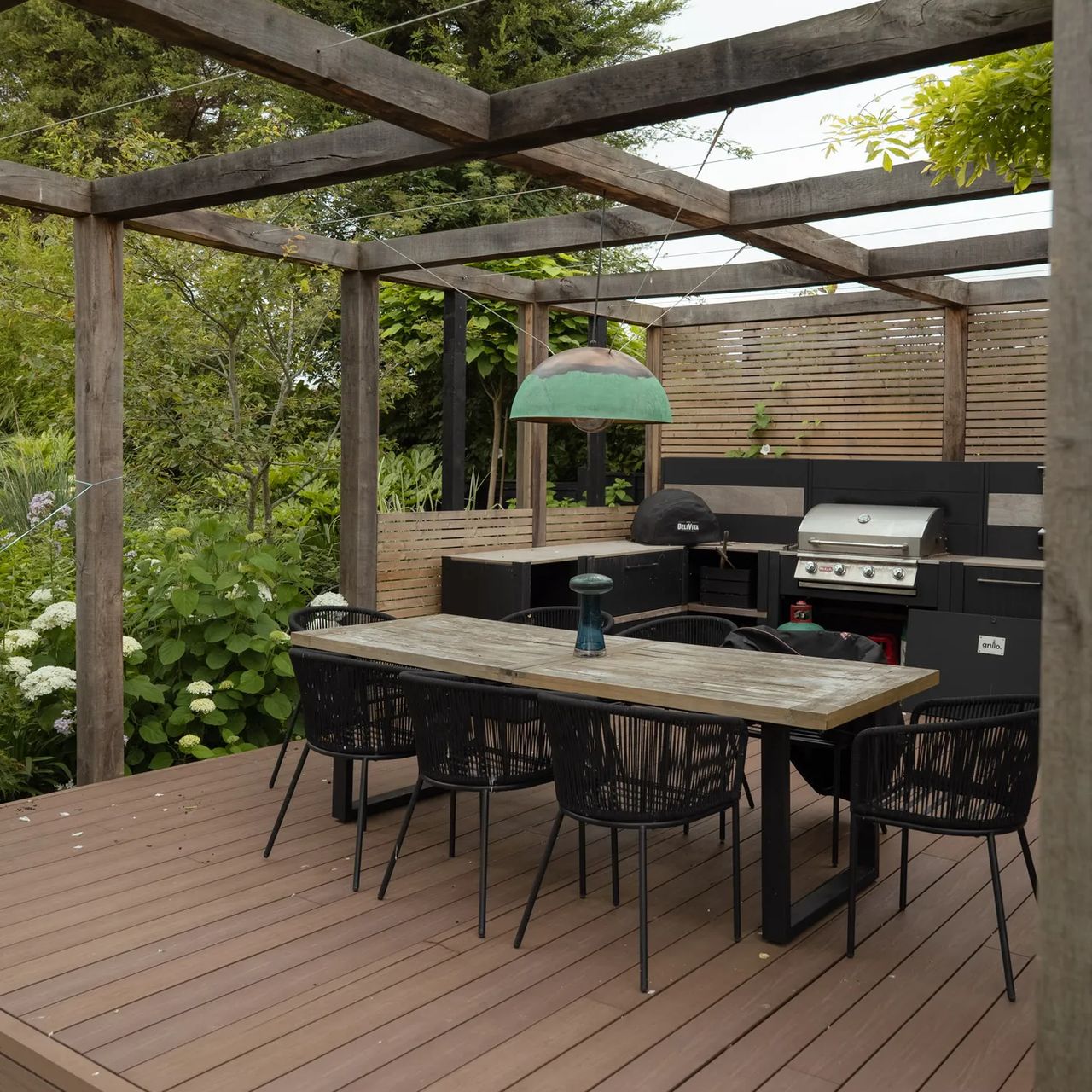
Deep graphite, framed by planting
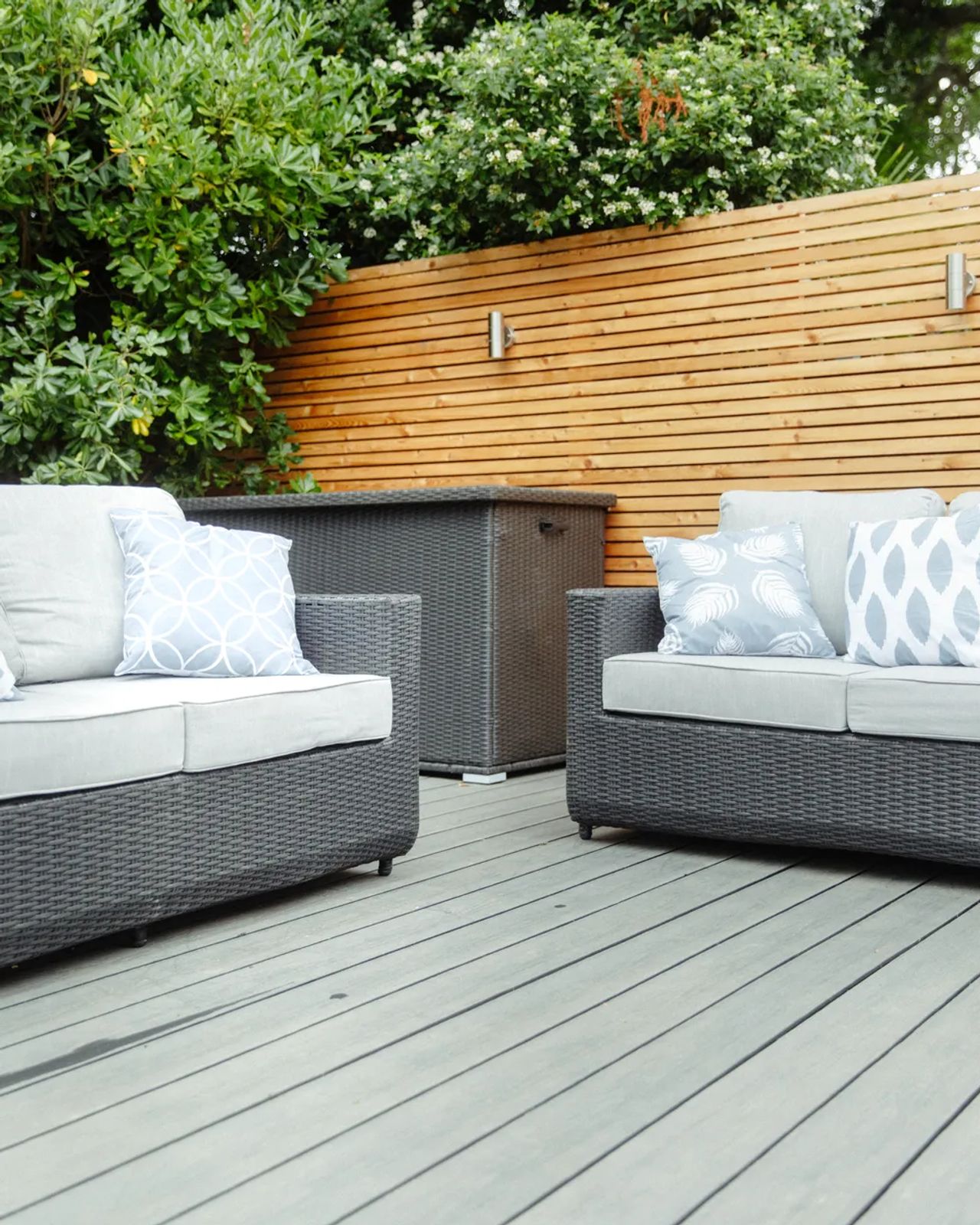
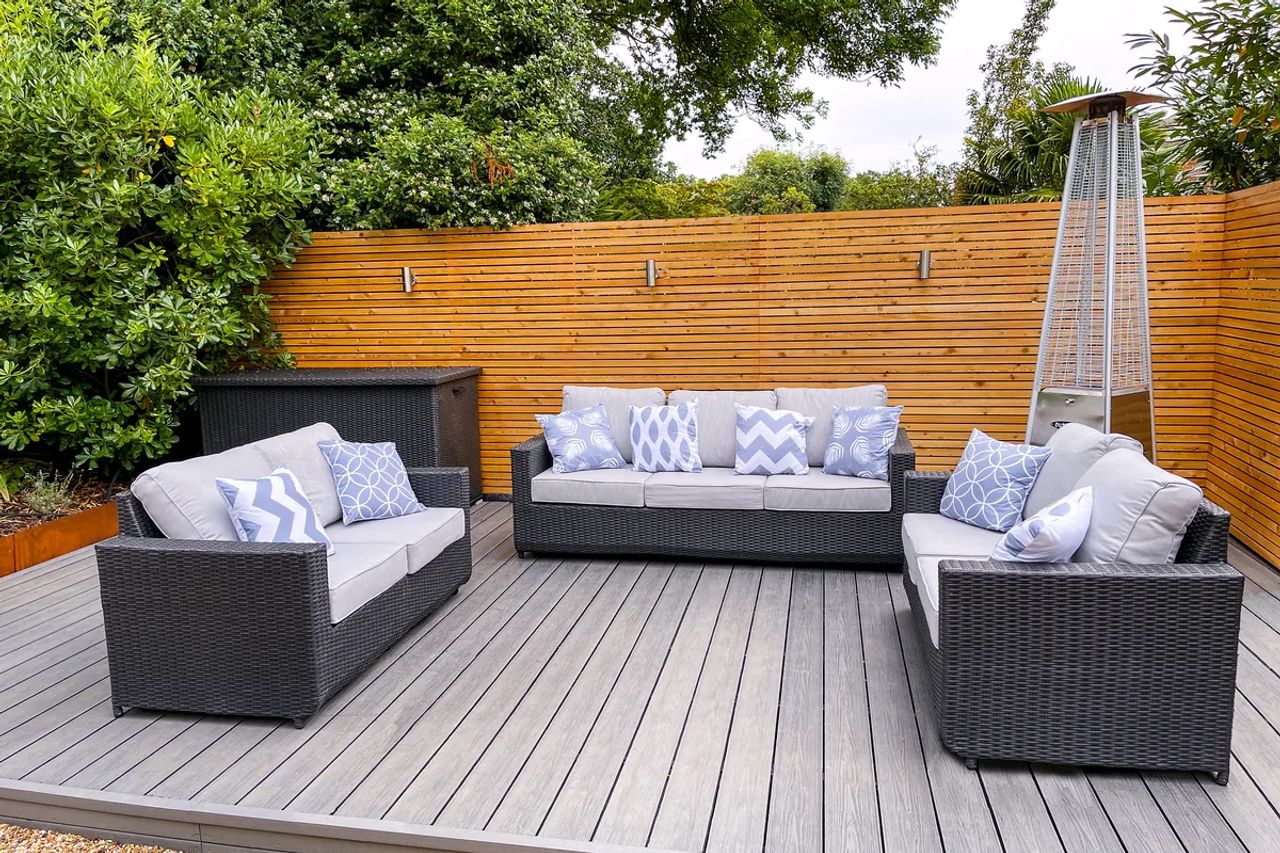
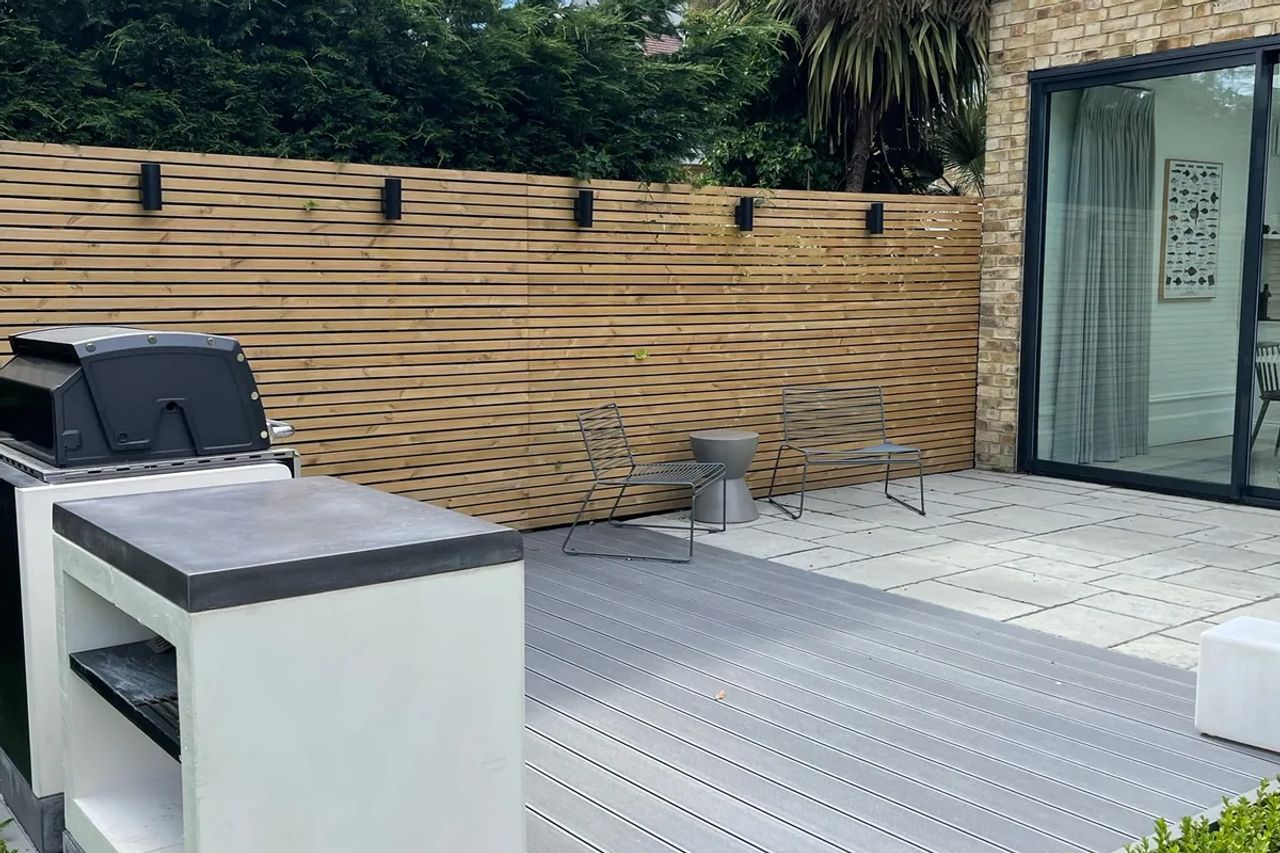
Slate grey, with a cedar screen
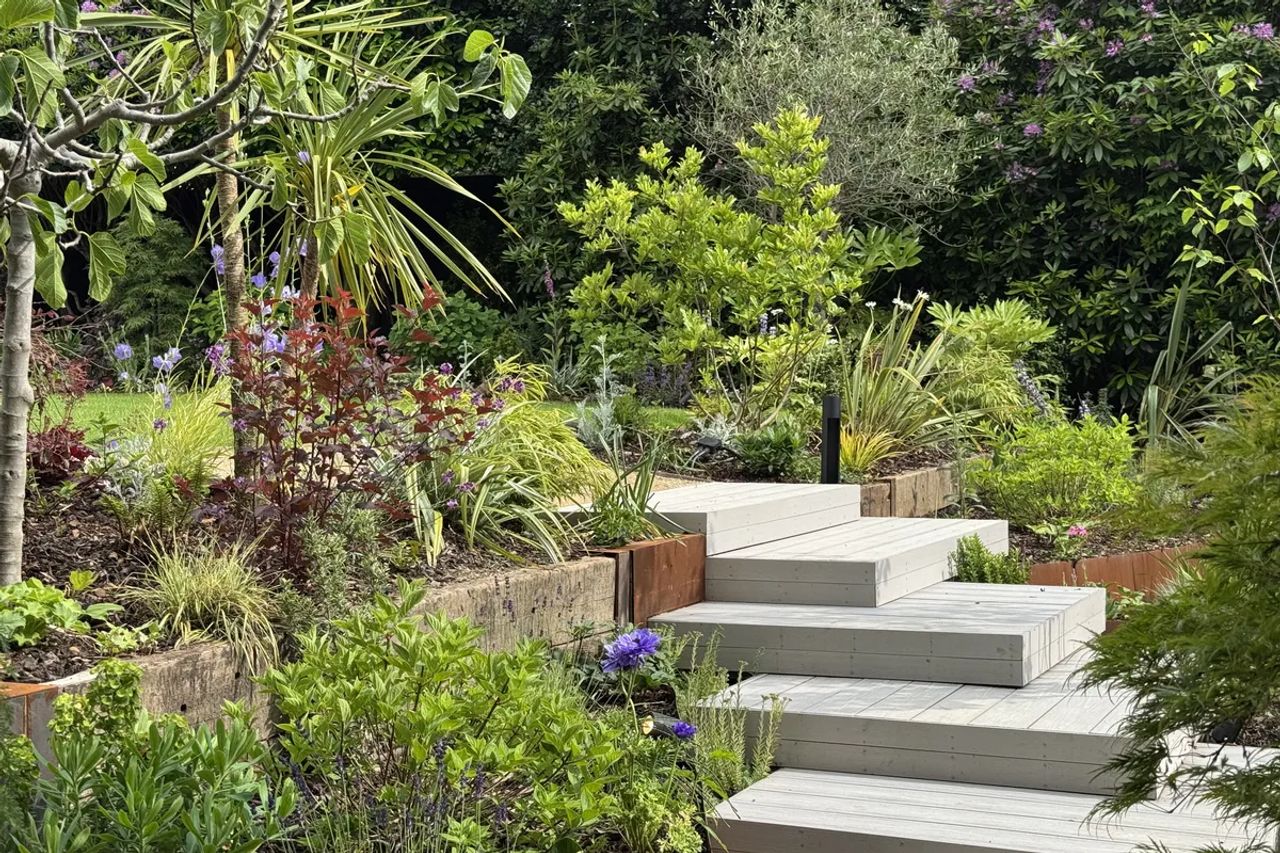
Three recent gardens built with composite decking.
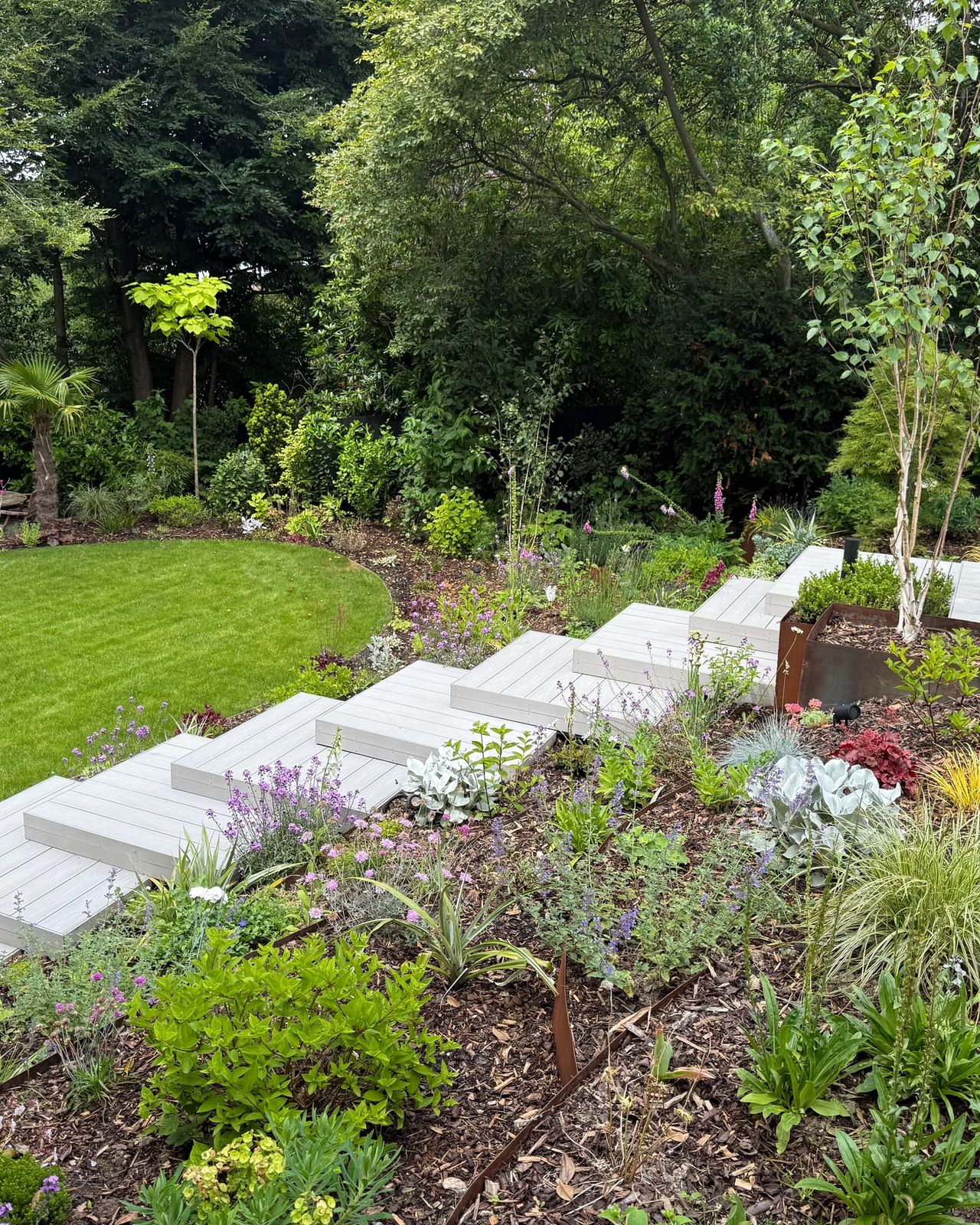
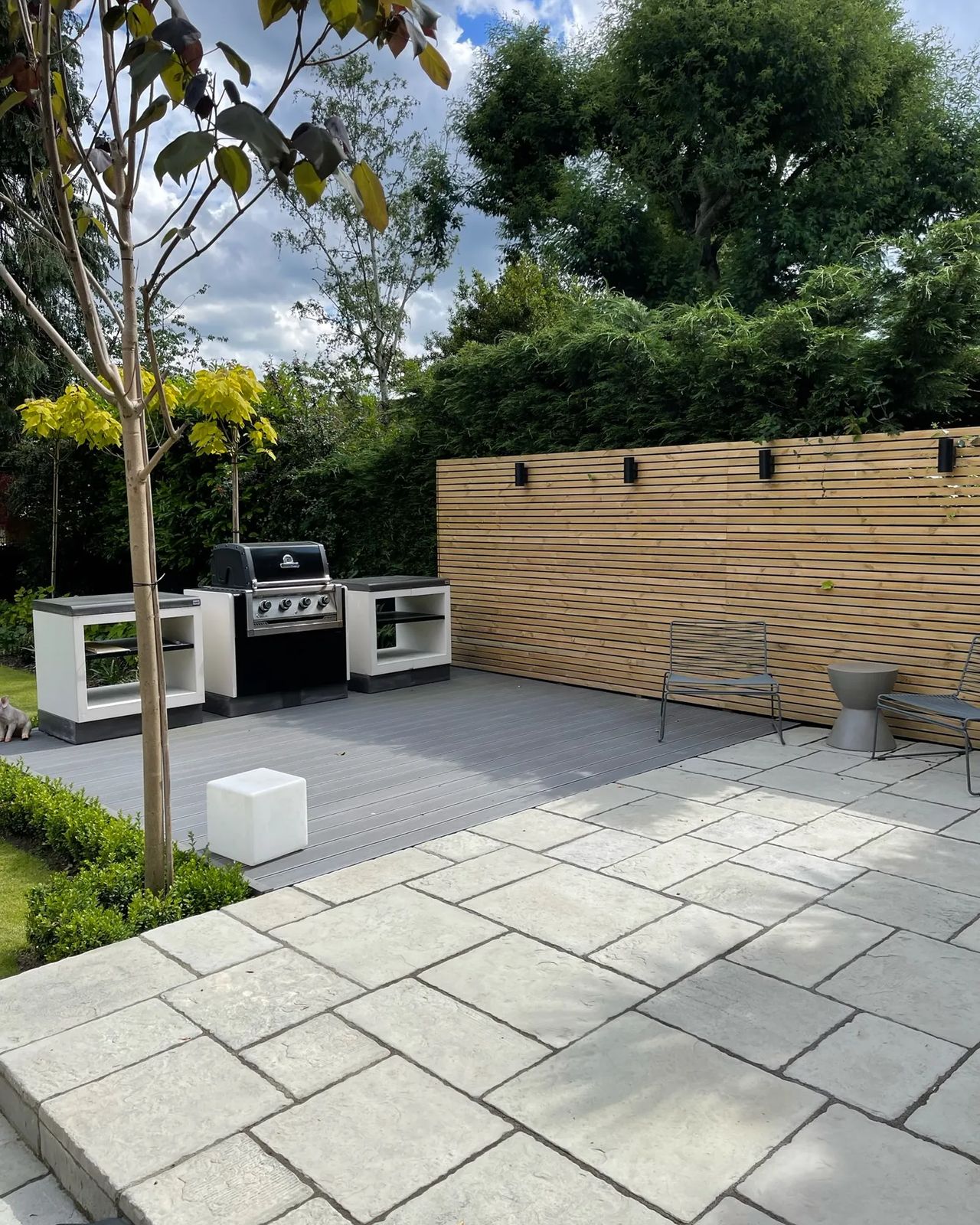
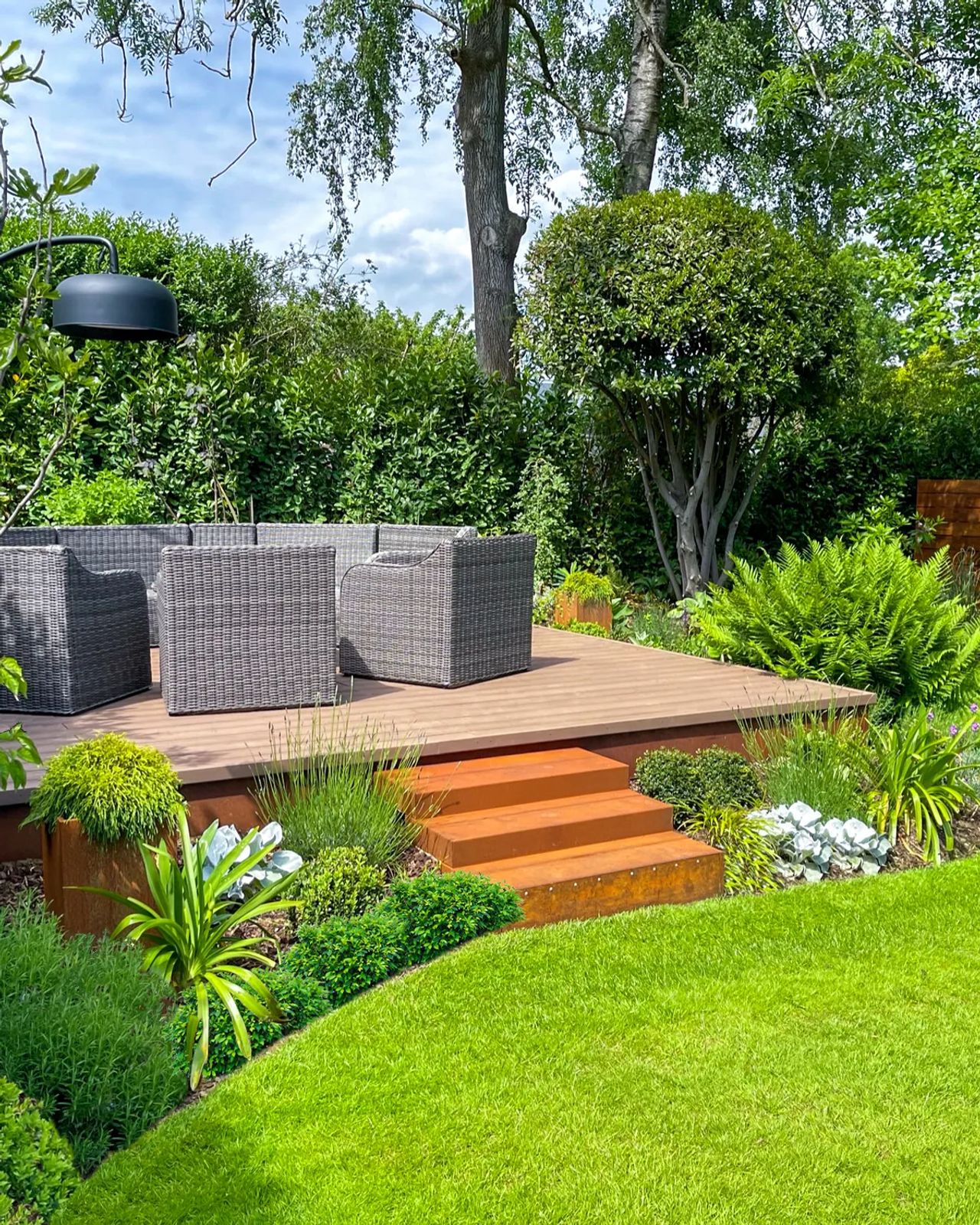
Four steps, carried out by the studio's own team.
Site survey
We measure the footprint, assess drainage, and confirm structural support. Every project begins with the ground, not the board.
Joist & substructure
Adjustable aluminium pedestals or pressure-treated timber joists, set dead-level, with concealed drainage below. The substructure earns its keep out of sight.
Board laying
Concealed T-clip fixings throughout — no visible screws. Boards are cut on site with a mitre-sled jig to keep the end grain square. Edge trims in matched composite.
Handover
A simple care sheet (there's very little required), the manufacturer's warranty documents, and a twelve-month studio-side review booked in the diary.
Questions we're often asked.
Is composite decking actually better than hardwood?
For most private gardens, yes. The capped polymer face resists water, UV, and foot traffic, and doesn't need the annual oiling that keeps a hardwood deck looking right. Hardwood is still the beautiful choice for a few very specific settings (covered verandas, show gardens). We will tell you which is right for yours.
Does it get hot underfoot?
The lighter tones stay comfortable in UK summers; the darker grades (graphite, charcoal) can run warm in July sun for a few hours, as any dark surface would. If you're barefoot-garden-first, we steer towards the mid and warm tones.
How does it age?
Uniformly. Unlike timber, which silvers unevenly where rain lands differently, composite holds its tone for the life of the warranty. The surface picks up a soft patina over the first year, then stays stable.
Can it be installed over an existing patio?
Yes, in most cases — pedestal substructures sit straight on concrete or paving and give us a level finish without breaking out the existing ground. It saves a week of groundwork and a skip of hardcore.
What is the cost like to commission?
Supply and fit varies with substructure type, the board specified, and the edge detailing. On any commission the figure is itemised in the design proposal, with no margin on margin and no hidden extras. We share it once we have walked the site and understood the brief.
Do you install composite decking as a standalone job?
For existing clients, yes. For new relationships we prefer to include it as part of a broader design — the terrace sits within the planting, the steps sit within the paving. Composite decking is a material, not a product; it benefits from the same consideration as the rest of the scheme.
Tell us about your garden. We'll take it from there.
Composite decking is a commitment of a generation. Let's begin with a walk of the site — no fee, no obligation — and see whether the commission is one we can take on.