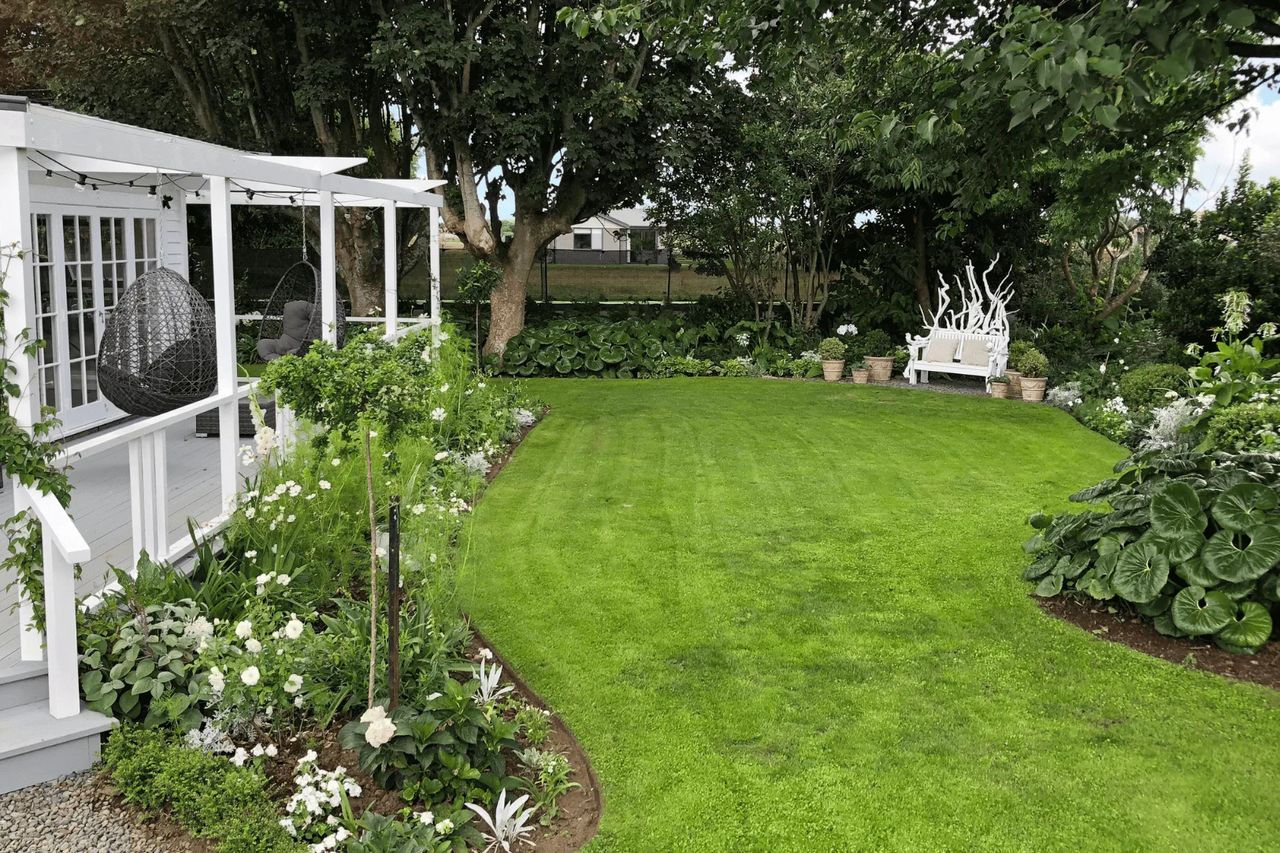
A repeated layer beneath the display
Matrix planting is a design method in which one reliable group of plants forms a continuous ground layer and other species rise through it. The matrix gives the scheme rhythm, coverage and continuity. Flowering perennials, bulbs and taller structural plants then provide distinct moments without leaving isolated clumps in bare soil. It is the logic behind many naturalistic borders, but it still depends on deliberate spacing and long-term editing. It is not a fixed plant list. The method only works when the repeated layer is genuinely suited to the site.
What is Matrix Planting?
Matrix planting is a layered planting system built around a repeated base of compatible, usually lower-growing plants. This matrix may be made from grasses, sedges or spreading perennials, often covering 60 to 80% of the planted area. Seasonal flowers, taller accents and bulbs are distributed through it, creating a scheme that reads as one community rather than a row of separate specimens.

The Benefits of Matrix Planting
- Naturalistic structure – Repetition creates the appearance of a plant community while retaining enough order for a domestic garden.
- Covered soil – A well-established matrix shades the surface, reduces open ground for annual weeds and protects soil from heavy rain.
- Long seasonal interest – Bulbs, early perennials, summer flowers, grasses and seed heads can take turns without the whole border depending on one peak month.
- Clear maintenance logic – Repeated species can be managed consistently, while weaker or over-vigorous accents are easier to identify and edit.
- Scale flexibility – The principle works in a broad landscape or a small town garden, provided the number of species is reduced to suit the available area.

How to Create a Matrix Planting Scheme
- Start with the conditions – Record light, soil, drainage and exposure. A matrix succeeds through compatibility, not through a fixed list of fashionable plants.
- Choose the base layer – Select two to four dependable species with similar needs and contrasting leaf forms. Use enough repetition for the ground layer to read continuously.
- Set the proportion – Allow roughly 60 to 80% of the scheme for matrix plants and the remainder for structural or seasonal accents. Use the lower end where larger perennials need space.
- Place structural plants first – Mark shrubs, tall grasses and long-lived perennials that will hold the winter outline. Repeat them at measured intervals rather than in a straight row.
- Distribute seasonal accents – Scatter flowering perennials and bulbs through the matrix in loose groups. Repeat each species several times so no plant appears accidental.
- Plant at useful density – Many perennial schemes begin at about 6 to 9 plants per square metre. Adjust for mature spread, then mulch lightly and water through the first growing season.
When to Plant a Matrix Scheme
Plant in September and October while the soil is warm, or in March and April before dry weather arrives. Autumn favours hardy grasses and perennials on free-draining ground. Spring is safer on heavy or persistently wet soil. Bulbs can be added through the planted matrix from September to November. Leave seed heads standing through winter where they remain sound, then cut the scheme back in late February or March before new growth gathers pace.

Common Questions About Matrix Planting
What is matrix planting?
Matrix planting uses a repeated layer of lower-growing plants as the framework for a wider scheme. Taller, flowering and seasonal plants are placed through that layer rather than separated by open soil.
How is matrix planting different from a traditional border?
A traditional border often groups plants in distinct blocks and leaves visible space between them. A matrix scheme relies on intermingling, repetition and near-continuous cover, with several layers occupying the same area.
Does matrix planting work in a small garden?
Yes, but the plant list should be disciplined. One or two matrix species, two structural plants and a limited set of accents usually read better than a compressed version of a large prairie scheme.
What percentage should the matrix layer be?
There is no compulsory ratio, but 60 to 80% is a useful design range. The correct figure depends on the spread and strength of the chosen plants. A vigorous grass matrix needs less initial density than a slow clumping sedge.
When do you cut back a matrix scheme?
Cut back most deciduous grasses and perennials in late February or March, before new shoots become easy to damage. Leave evergreen grasses and sedges intact, combing out dead foliage rather than cutting them to the ground.
Order without a visible grid
Matrix planting should not look as though every plant was placed by measurement, even though the plan behind it is exact. The repeated layer gives the eye somewhere to rest and lets seasonal plants come forward in turn. That balance of structure and looseness is central to our garden design work.