Evergreen structure with a long life
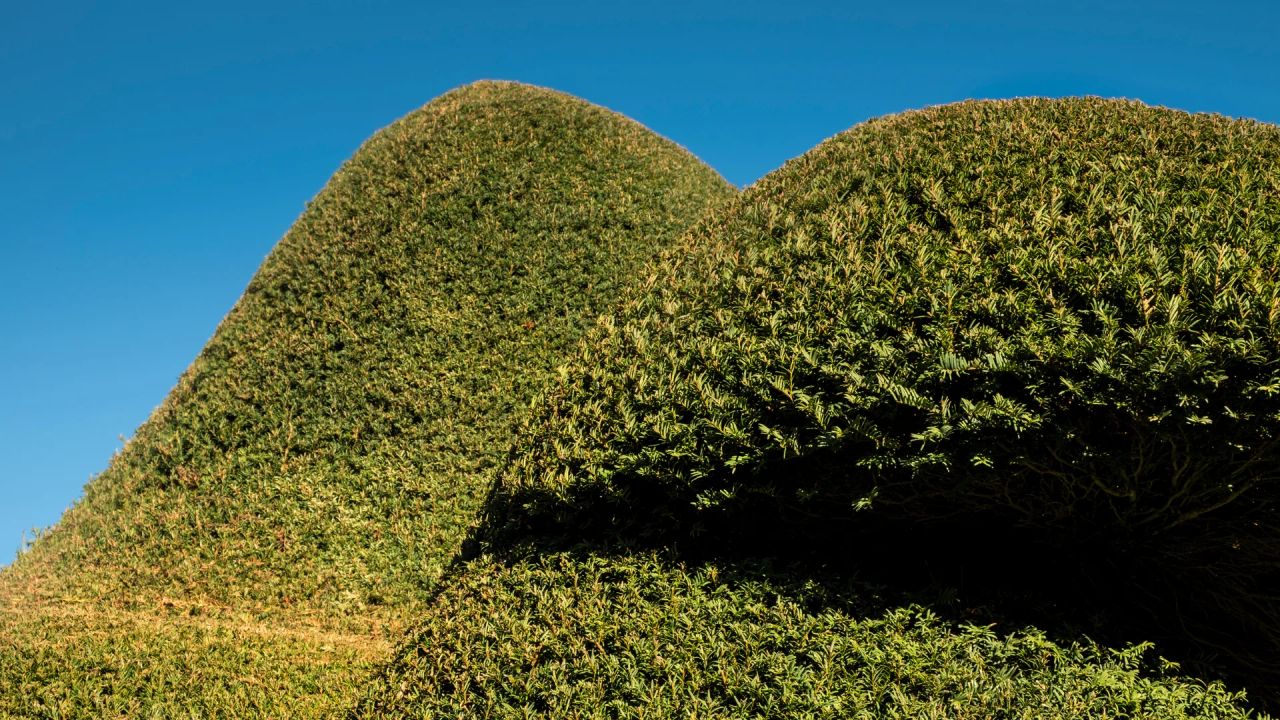
Yew, or Taxus baccata, is a long-lived evergreen conifer native to Britain and widely used for hedging and topiary. It grows in sun or shade, responds to regular clipping and can recover from cuts into old wood. In good conditions, a young hedge can make 20 to 40cm of growth a year. Every part is toxic if eaten, apart from the red flesh around the seed. Read ahead to find out 6 reasons why.
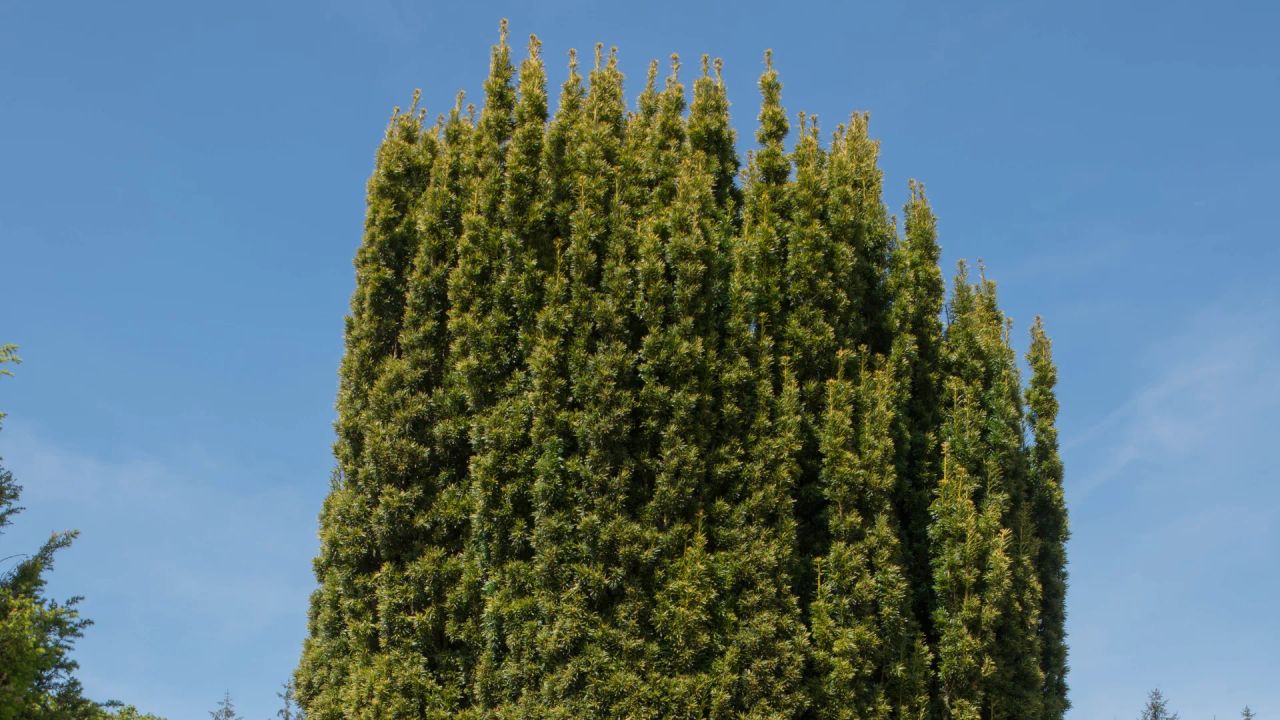
6 Reasons to Grow a Yew Hedge
- Faster growth than its reputation – Yew is often described as very slow, but established plants can add about 20 to 40cm a year where soil drains well and competition is controlled. A planned trim once a year is usually enough to keep that growth dense.
- Evergreen screening – The fine dark foliage holds through winter and forms a solid background for borders, gates and entrances. Unlike a fence, the surface remains living and can be shaped as the garden changes.
- Recovery from hard pruning – Yew can produce new shoots from old brown wood. That makes careful renovation possible when a hedge has become too wide or tall, unlike most conifers, which remain bare after severe cuts.
- Exceptional longevity – Individual yew trees can live for many centuries. A hedge will not reach ancient-tree age in ordinary domestic management, but the species is capable of remaining useful through repeated cycles of clipping and repair.
- Cover for wildlife – Dense evergreen growth offers nesting and shelter, while mature female plants can carry red arils eaten by birds. Trimming should wait where an active nest is present.
- A clear safety decision – Yew foliage, bark and seeds are poisonous if eaten. That does not prevent its use in gardens, but it should not be planted where horses, livestock or animals likely to chew hedging can reach it, and clippings must be removed promptly.
How to Grow a Yew Hedge in the UK
Plant yew in well-drained soil from autumn to spring. Bare-root and root-balled stock are most widely available during dormancy, while container-grown plants can be used at other times with reliable watering. Dig a clear planting strip and set plants about 45 to 60cm apart for a single row, adjusting for stock size and the nursery's guidance.
Keep the root flare at soil level, firm carefully and water thoroughly. Mulch the strip, leaving the stems clear, and prevent grass from competing during establishment. Water through prolonged dry periods for the first two growing seasons. Clip the sides and top once a year from late summer into early autumn, checking first for active nests.
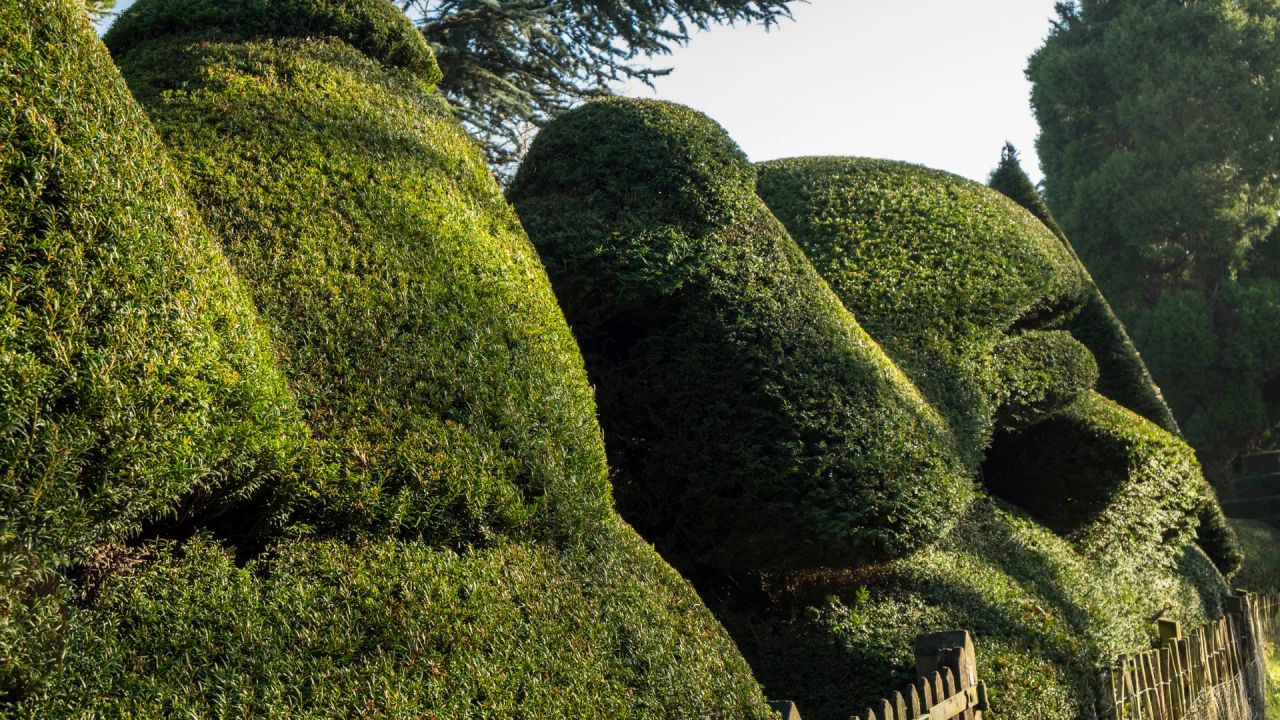
When to Plant a Yew Hedge
Plant bare-root or root-balled yew from November to March while the plants are dormant and the ground is neither frozen nor waterlogged. October and early spring can suit container-grown stock. In heavy clay, improve the wider drainage rather than filling each hole with soft compost that may hold water around the roots. Yew dislikes prolonged waterlogging more than ordinary shade.
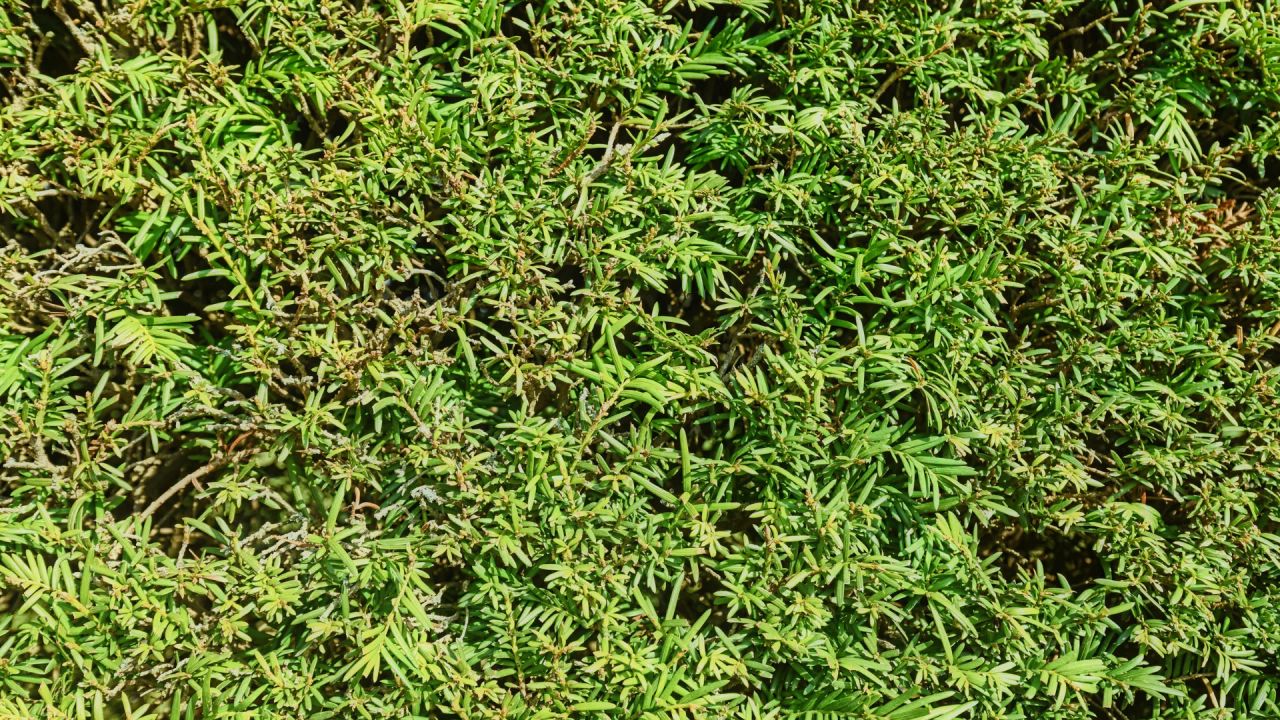
Common Questions About a Yew Hedge
How fast does a yew hedge grow?
A healthy yew hedge can grow about 20 to 40cm a year after establishment. Water, soil drainage, plant size and competition all affect the rate. Regular light trimming encourages a dense face and often produces a better hedge than chasing maximum height.
Is yew poisonous to dogs and horses?
Yes. Yew foliage, bark and seeds are highly toxic if eaten, and horses are particularly vulnerable. Do not plant it beside grazing land or where animals chew plants. Collect every clipping and seek urgent veterinary advice after suspected ingestion.
Yew or leylandii, which is better?
Yew grows more slowly but tolerates shade, clips closely and can recover from old wood. Leylandii grows much faster but requires strict trimming and cannot usually be restored after cutting into brown wood. The better choice depends on timescale, space and long-term maintenance.
When should you plant a yew hedge?
Plant bare-root or root-balled yew between November and March. Container-grown yew can be planted outside that window, but autumn or spring is easier because the soil is moist and watering demand is lower.
How far apart should yew be planted?
For a domestic single-row hedge, 45 to 60cm between plants is a useful range. Larger stock may be set wider. Very close spacing gives quick visual coverage but increases cost and root competition without guaranteeing a better mature hedge.
A hedge that can be repaired
Yew earns its place through more than appearance. It can be clipped closely, renovated thoughtfully and held at a useful scale for a very long time. That makes the early decisions about drainage, spacing and access especially important. Our hedge and boundary maintenance is planned around that full life, not only the first season of growth.