Several seasons in one pot
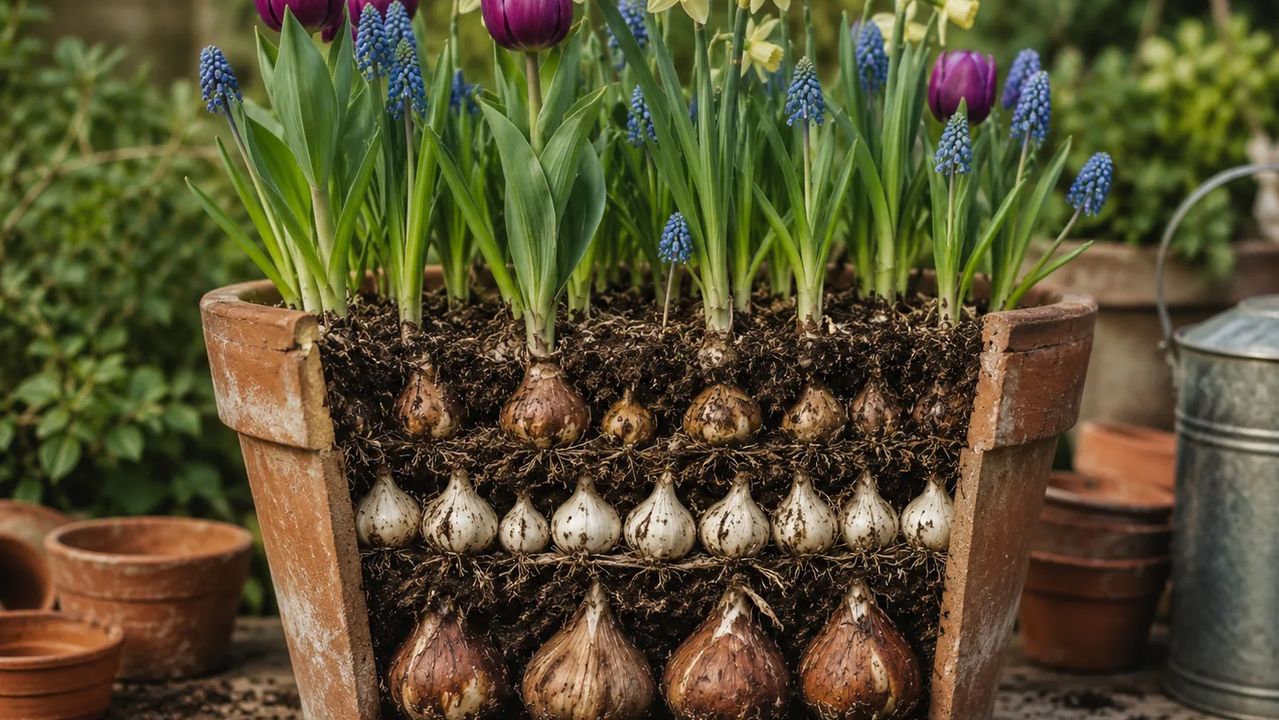
A bulb lasagne is a container planted with several layers of bulbs, arranged by size and flowering time. The largest, latest bulbs sit deepest and smaller, earlier bulbs sit above them. Each layer grows through the spaces left by the one above, producing a longer display from one pot without requiring a larger terrace, balcony or doorstep. The method is simple to repeat.
What is a Bulb Lasagne?
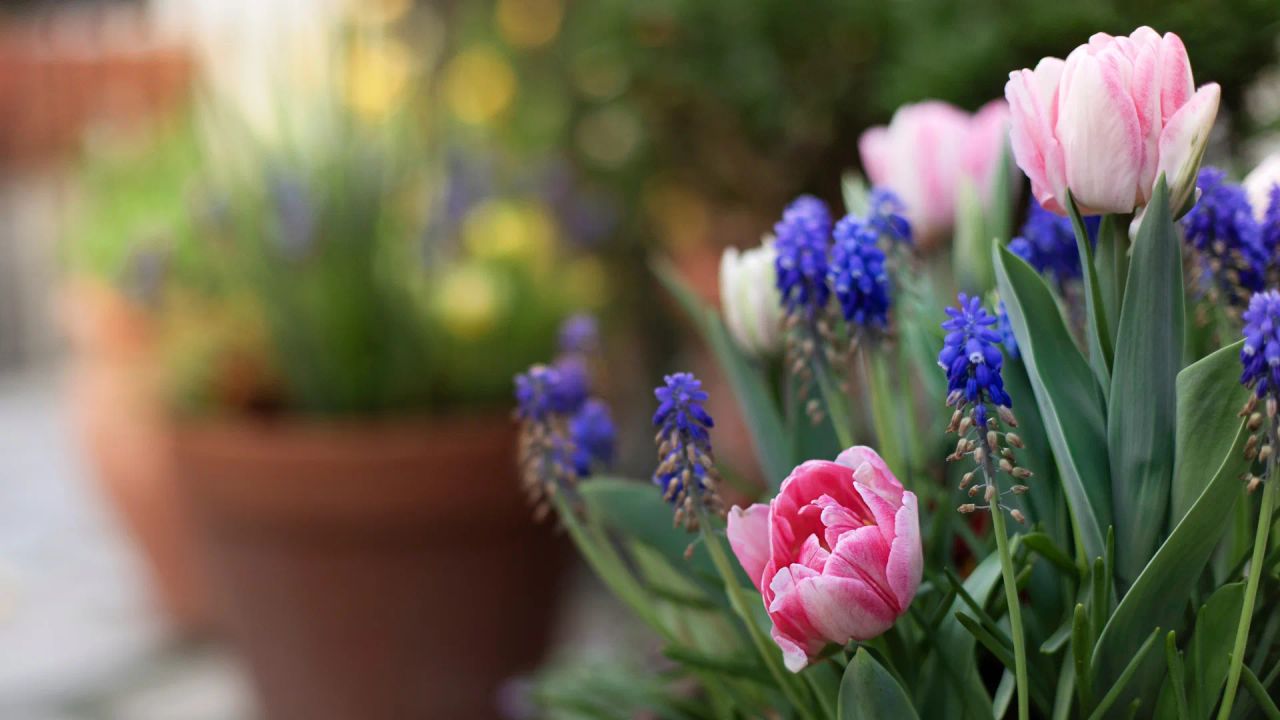
A bulb lasagne is a method of layered bulb planting in a deep container. Tulips or large daffodils usually form the bottom layer, smaller daffodils or hyacinths sit in the middle, and crocuses, muscari or dwarf irises are placed near the surface. The bulbs flower in sequence because each type is planted at an appropriate depth.
The Benefits of a Bulb Lasagne
- Longer spring colour – Choosing bulbs with different flowering periods can carry one container from February crocuses into April daffodils and May tulips.
- More from one pot – Layering uses the depth of a container, which is useful on a small terrace, balcony or front step where floor space is limited.
- Planned combinations – Flower colour, height and timing can be considered together instead of relying on a single short burst.
- Early pollinator food – Crocuses, grape hyacinths and suitable early daffodils can provide nectar and pollen when relatively few plants are flowering.
- Easy seasonal change – The entire display can be moved, turned or replaced more easily than bulbs planted across a border.
How to Plant a Bulb Lasagne
- Choose a deep pot – Use a frost-resistant container about 35 to 45cm deep with clear drainage holes. Cover the holes with crocks only if needed to stop compost washing out.
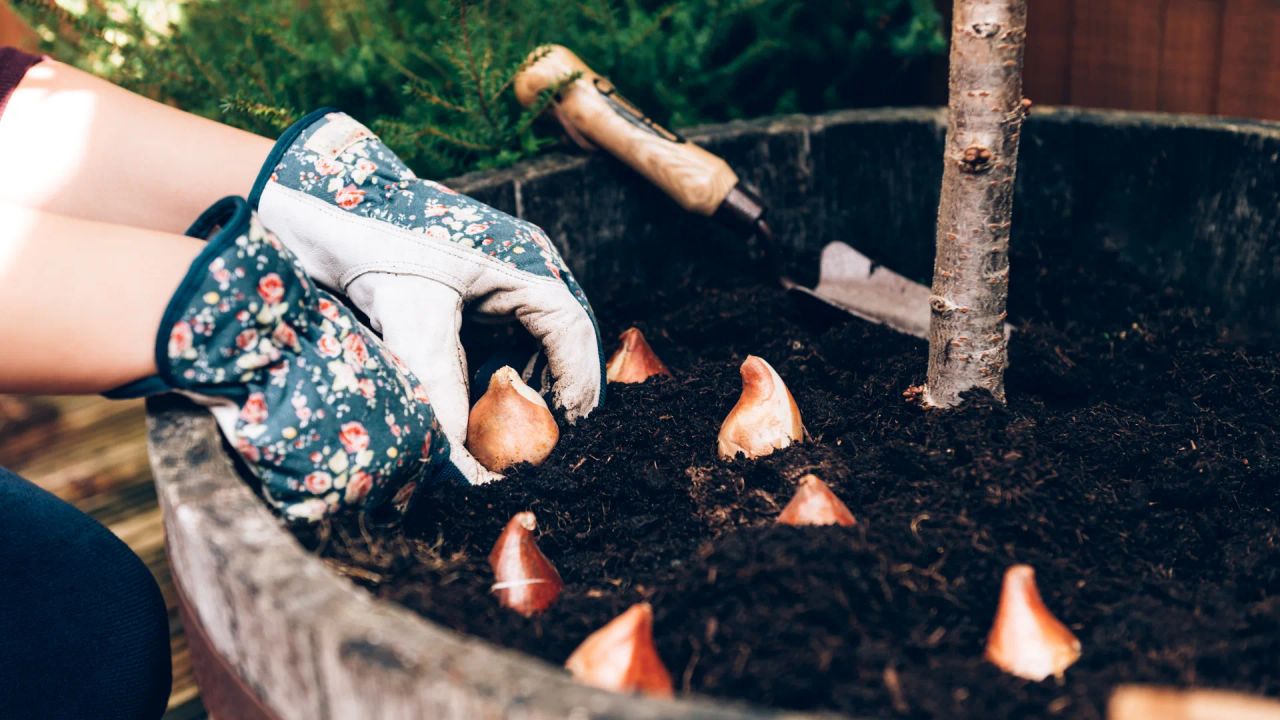
- Add the first layer – Put 10 to 15cm of peat-free compost in the base. Set large bulbs, such as tulips, with their pointed ends upwards and leave a small gap between each one.
- Cover the bulbs – Add 5 to 8cm of compost so the next layer does not sit directly on the bulbs below.
- Place the middle layer – Add medium bulbs such as daffodils or hyacinths. Stagger them so they sit above the gaps in the first layer.
- Finish near the surface – Cover again, then plant small bulbs such as crocus, muscari or Iris reticulata about 5 to 8cm below the finished surface.
- Water and position – Water thoroughly, allow the pot to drain and place it in sun or light shade according to the chosen bulbs. Keep the compost just moist through winter.
When to Plant a Bulb Lasagne
Plant most bulb lasagnes from September to the end of October. Tulips are often planted in November because cooler soil can reduce the risk of tulip fire, but a mixed container can still be assembled in late October or November. Do not plant into frozen compost. If the pot will stand in an exposed position, raise it on feet so winter rain can drain freely and prevent the base from sitting in water.
Common Questions About Bulb Lasagne
When should you plant a bulb lasagne?
September and October suit most spring bulbs. A tulip-led combination can be planted in November. The aim is to plant while bulbs are dormant and before the compost becomes frozen or persistently waterlogged.
How many layers can you have in a bulb lasagne?
Three layers are practical in a container 35 to 45cm deep. Two layers work in a shallower pot. More than three can leave too little compost around each bulb and make watering, rooting and drainage less reliable.
Which bulbs work best together?
Choose bulbs with compatible light and drainage needs but different flowering times. A dependable sequence is crocus or dwarf iris on top, small daffodils in the middle and tulips at the bottom. Check the mature heights so one layer does not hide the next.
Can you leave a bulb lasagne in the pot for next year?
Yes, provided the bulbs are perennial, the foliage is allowed to die back naturally and the pot is fed after flowering. Displays often become less even as bulbs multiply. Lift, divide and replant them when the pot becomes crowded or flowering declines.
Do the bottom bulbs get crushed by the top ones?
No. Bulbs are firm enough to carry the light weight of compost and smaller bulbs above. Shoots naturally grow around obstacles and through gaps. The important points are correct planting depth, drainage and enough compost between each layer.
A display with its timing built in
A good bulb lasagne is less about filling every gap and more about sequencing. One container changes character several times, with each layer arriving as the last begins to fade. Our approach to garden maintenance follows the same rhythm: prepare at the right moment, allow plants to complete their cycle and make the next intervention only when it is useful.