Evergreen cover with a late season role
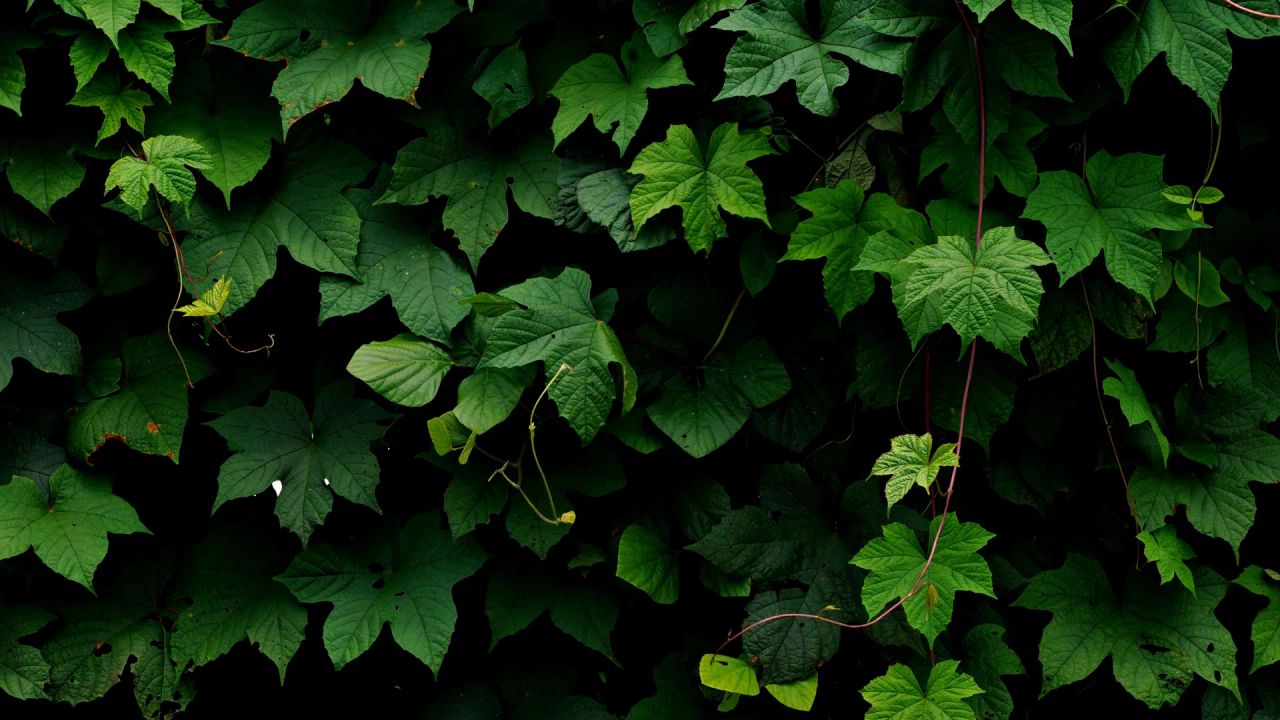
Ivy, or Hedera helix, is a vigorous evergreen climber native to Britain and much of Europe. It attaches by aerial roots, tolerates deep shade and can reach mature flowering growth when left in place. Its green-yellow flowers appear from September into November, followed by dark berries in winter. It can cover walls, fences, ground and mature trees. Its role depends on where it is allowed to grow. Read ahead to find out 6 reasons why.
6 Reasons to Grow Ivy
- Food and shelter for wildlife – Dense ivy gives insects and small animals cover throughout the year. Its foliage creates protected spaces that remain useful in winter when deciduous plants have lost their leaves.
- Late nectar for pollinators – Mature ivy flowers in autumn, often from September to November. The nectar-rich flower heads attract bees, hoverflies, wasps and other insects at a point when fewer plants are in bloom.
- Evergreen screening – Ivy can soften a fence, hide a sound wall or provide a green backdrop without waiting for spring. Regular trimming keeps it within the depth and height a boundary can support.
- Growth in difficult shade – Few climbers establish as reliably in dry shade. Ivy can grow as ground cover beneath trees or on a north-facing boundary, although young plants still need watering while their roots establish.
- Nesting and winter cover – Thick, mature growth can provide nesting sites and shelter for birds. Any pruning should be preceded by a check for active nests, which are protected while in use.
- Manageable growth on sound walls – Ivy does not normally drill into intact brick or sound mortar. Its roots cling to the surface. Problems arise where render is loose, mortar is already failing or shoots enter gaps, roof spaces and rainwater goods.
How to Grow Ivy in the UK
Plant ivy in autumn or spring, or at any mild time if it can be watered. Most forms accept sun or shade, but variegated cultivars hold their colour better with brighter light. Set the root ball about 30 to 45cm from a wall so it sits outside the driest rain shadow, then angle the stems towards their support.
Water through the first growing season and mulch the soil without covering the stem base. Young shoots may need tying to wires until they attach. Once established, trim in spring or late summer to keep windows, eaves, vents and gutters clear. Wear gloves because ivy sap and foliage can irritate skin.
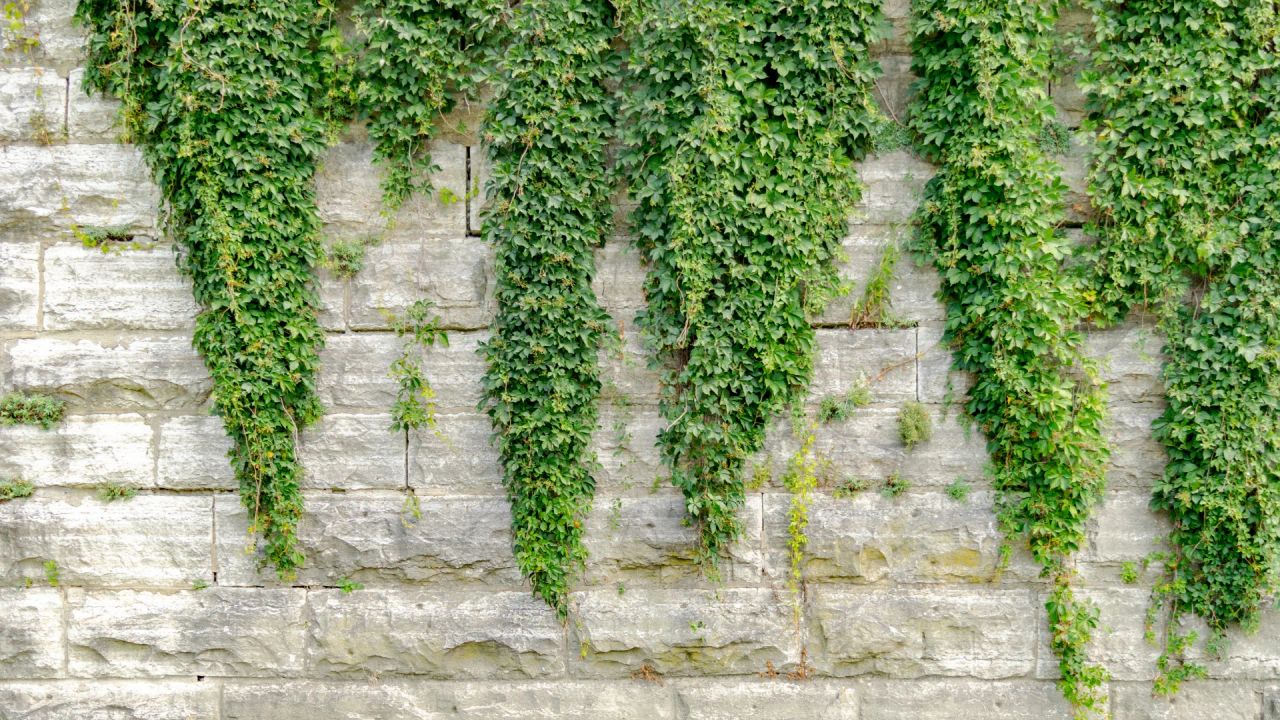
When to Plant Ivy
October and November are good planting months while the soil is still warm. March and April also work well. Avoid frozen, waterlogged or very dry ground. Container-grown ivy can be planted during summer, but it will need closer watering. Mature ivy can be pruned at most times, subject to nesting birds and severe weather.
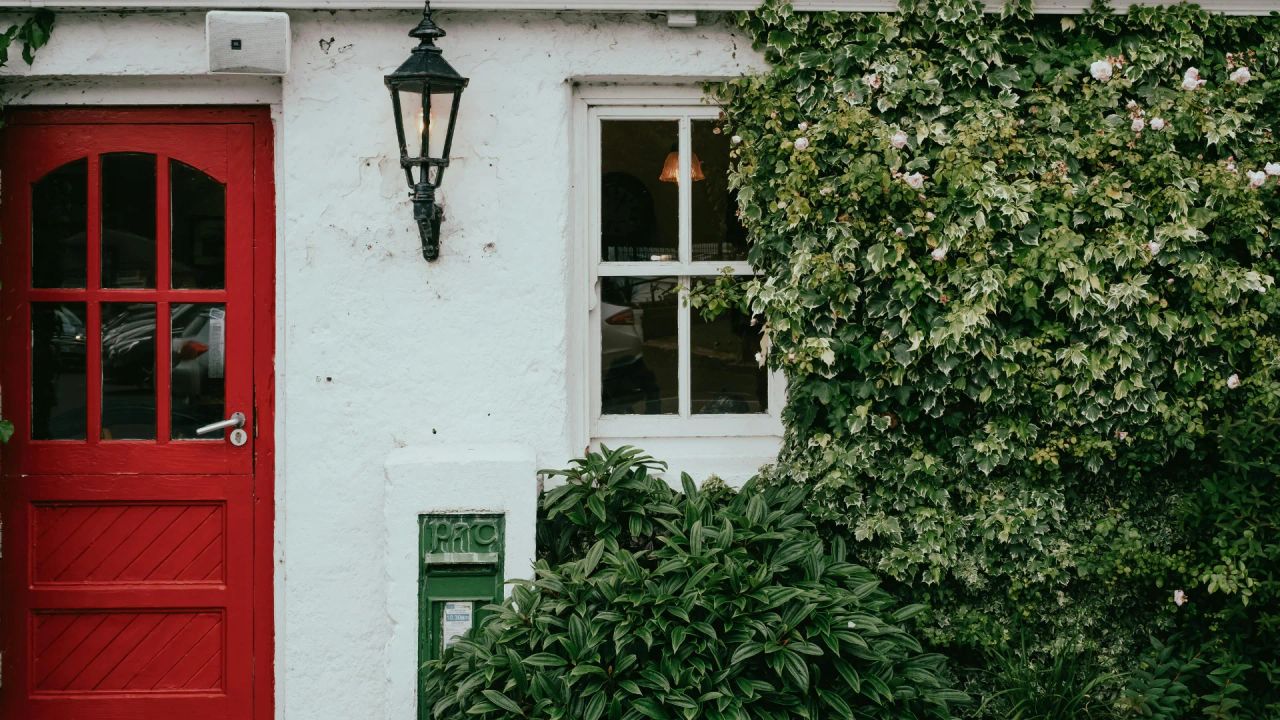
Common Questions About Ivy
Is ivy bad for walls?
Ivy is generally compatible with sound masonry, but it can worsen existing defects. Aerial roots attach to the surface rather than feeding from it. Check old mortar, cracked render, loose tiles and open joints before allowing full coverage, and keep growth away from roofs and gutters.
Does ivy kill trees?
Ivy is not parasitic and does not take food from a tree. Heavy growth can add wind resistance, hide defects or compete for light in a weakened tree. Mature trees should be assessed on condition rather than cleared automatically.
Is ivy invasive in the UK?
English ivy is native and valuable to wildlife in the UK. It is vigorous rather than legally invasive. Unchecked plants can spread across structures and smother small plants, so position and maintenance matter.
When does ivy flower?
Mature ivy usually flowers from September to November. Juvenile climbing shoots do not flower. The plant must reach its adult, bushier growth phase before it produces flower heads and winter berries.
Should you remove ivy from a fence?
Remove or reduce ivy if the fence is weak, leaning or unable to carry the added weight. On a sound structure, managed coverage can be retained. Cut it back in stages rather than exposing every nesting and overwintering space at once.
Keep the structure, manage the growth
Ivy is most useful when its support is sound and its spread is understood. Total removal is not always the responsible answer, and neglect is not a plan either. Our approach to hedge and boundary maintenance keeps access, structure and wildlife value in view at the same time.